Are the updates on the 2025 Renault Kiger enough to give the sub-four metre SUV better ammo in a hotly contested segment? We find out
Words: Gaurav Davare
Photography: Kalidas M
Since February 2021, the Renault Kiger has been a long-standing player in an intensely competitive sub-four metre SUV segment. Sure, it has gotten incremental updates over the years, but the competitive heat in this segment isn’t dying down anytime soon, rather it’s only getting more intense. It is now time for a proper midlife refresh for the Kiger and it has arrived. Question is, are there enough changes to still consider the Renault Kiger a worthy competitor in this space? We got a chance to get up close and personal with it in a rather unique manner, by pushing it to the limit at the ICAT testing facility in Delhi with a variety of curated courses.
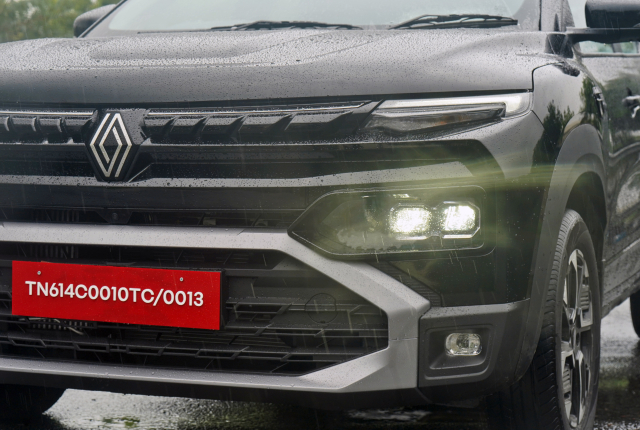
Much like the 2025 Renault Triber, the most visible changes on the 2025 Renault Kiger are up front. New Renault logo aside, there’s a fresh look for the front and rear bumpers with a more prominent aluminium finish for the skid plates to give it that SUV identity. More importantly, there’s a new front grille that reminds me of the Megane. This is complemented by a sleeker set of LED DRLs with LED fog lamps now added to the mix. Even the bonnet has been slightly tweaked to give it a fake hood scoop like effect. Doesn’t necessarily add muscle to the Kiger’s character but freshens things up.
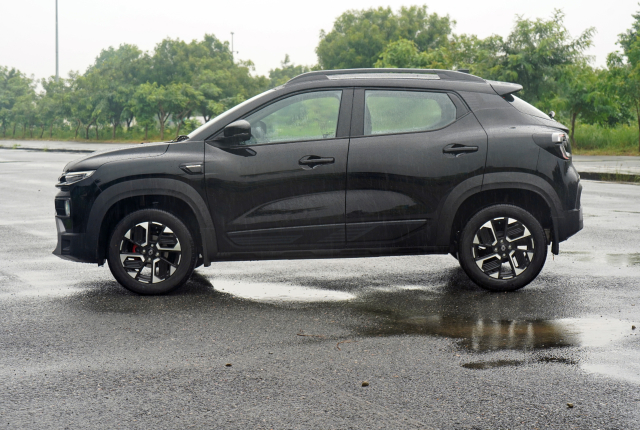
Heading over to the side profile, the familiar silhouette, rugged high stance and roof rails on the Kiger remain. What is different is the new 16-inch alloy wheel design and red brake callipers which is definitely a step up from before. At the rear, the only real change is a clear lens view for the LED tail lamps, to really make them stand out more. Renault have also decided to add a new Oasis Yellow and Shadow Grey paint option, with my preference going towards the latter. Overall, modest exterior changes, but enough to be easy on the eyes, especially for potential young buyers.
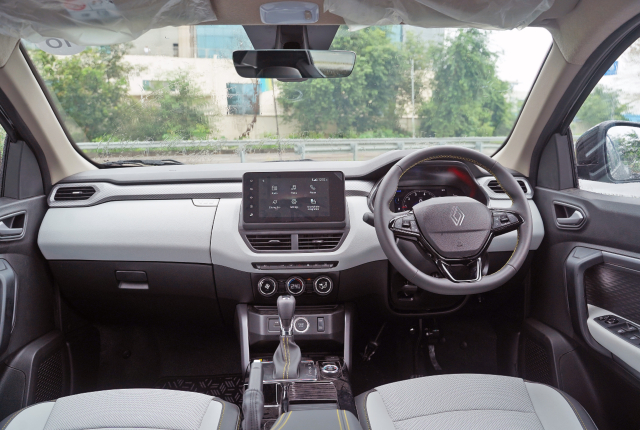
Inside, you’ll notice much of the cabin layout remains the same, but you do get a new dual-tone black and grey theme, which is a welcome change over the all-black theme from before. What I particularly liked here were the contrast stitching on the leatherette seats and steering wheel in the traditional Renault yellow colours.
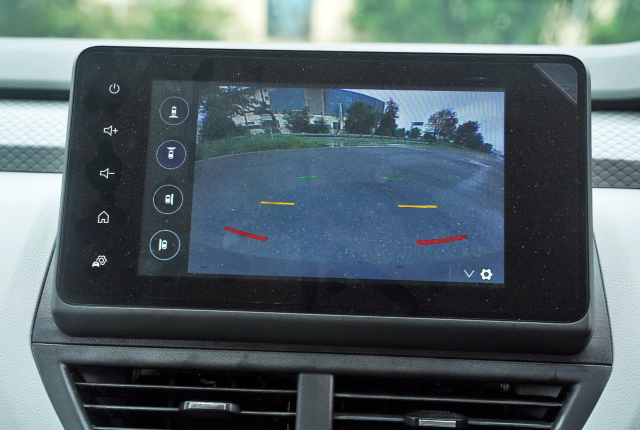
The major gains come in the features department with ventilated front seats, automatic headlamps and rain sensing wipers. It also now gets six airbags as standard and a 360-degree camera that offers satisfactory resolution for the price range the Kiger sits in but it would’ve been ideal to also have the option of a bird’s eye view. While the feature additions were much needed, I feel it could’ve been an even sweeter deal if the 2025 Renault Kiger also gained things like an electric sunroof, powered front seats, multi-zone climate control or even connected car tech. Nevertheless, the additions nicely complement an existing feature package that covers the necessities like an eight-inch touchscreen infotainment system with wireless Android Auto and Apple CarPlay. a seven-inch digitised driver’s display, keyless entry with push-button start, cruise control, automatic climate control, wireless charging pad and an air filter. Apart from this, much of the cabin remains as is, which also includes the fairly comfortable second row seats good enough for two full-sized adults and a very usable 405-litre boot.
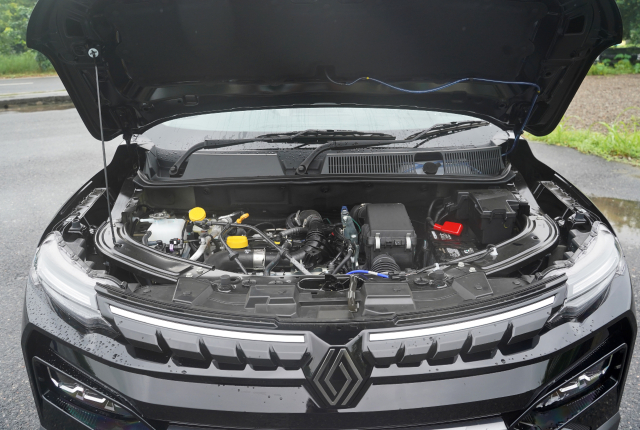
Mechanically, the facelifted Renault Kiger remains unchanged with the option of either a 72-hp 1.0-litre naturally aspirated petrol engine or a 100-hp 1.0-litre turbo-petrol engine. A five-speed manual gearbox is standard for both engines, with a five-AMT for the naturally aspirated petrol and CVT automatic gearbox option for the turbo-petrol engine. There’s also an optional CNG kit limited to 1.0-litre naturally aspirated petrol-manual combination, as a retrofit through authorised dealerships. For our drive, we had the 1.0-litre turbo-petrol CVT setup with a variety of curated courses at ICAT to help the Kiger stretch its legs.
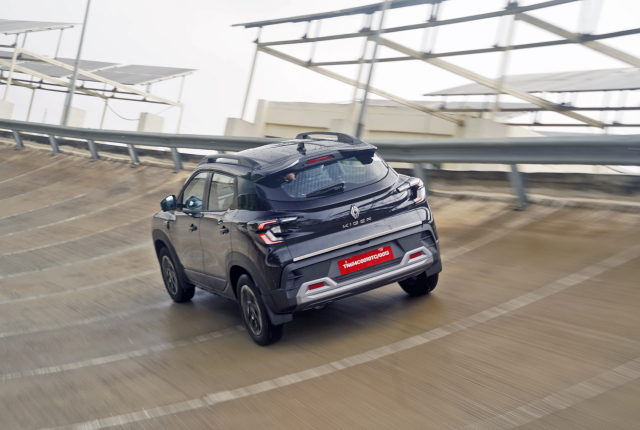
One of the courses was an oval section, smaller compared to the likes of NATRAX, but enough for a car of this stature. While it’s extremely uncommon for a facelifted model to get a new powertrain option, it would’ve been nice if the Kiger got it as the turbo-petrol unit isn’t the most enthusiastic of units as you need to keep it in a high rev band to make the Kiger gain proper momentum especially when trying to execute a quick sprint. On the other hand, if you’re going for a calm cruise around the city, the engine feels well-refined for a three-cylinder unit with great driveability. The CVT automatic gearbox also helps its case with a linear progression, masking most of the turbo lag and the usual rubber-banding effect of the CVT is barely noticeable.
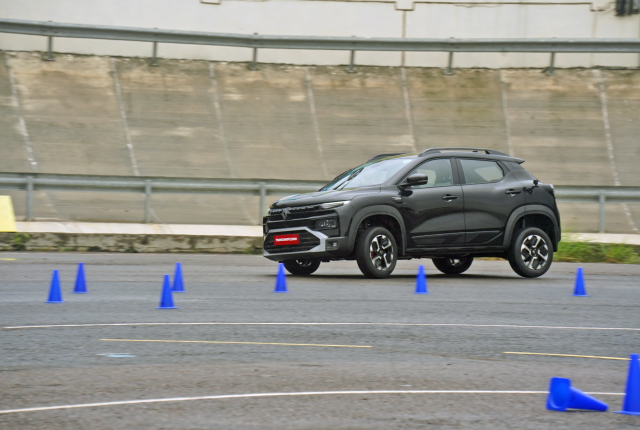
Renault claims that they’ve improved the Kiger’s NVH levels with enhanced dash and cowl insulation, thicker floor carpets and insulated A pillars, but I didn’t really notice much of a difference and there could be room for improvement. The not-so-enthusiastic powertrain is somewhat made up with its ride and handling dynamics. I got the perfect chance to test that at the Gymkhana course with a tight and twisty slalom section. No matter how hard I threw the Kiger around, it felt properly agile with the rear end only coming a little loose, likely due to track conditions being very wet that day. This, combined with a comfortable ride, makes for a fairly enjoyable driving experience.
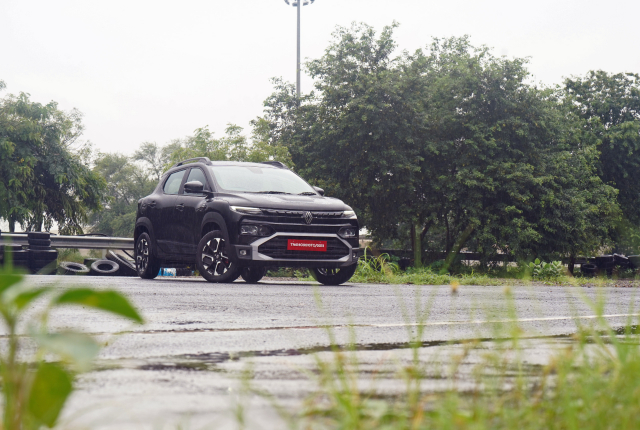
Considering the 2025 Renault Kiger is a modest update overall, the positive thing is that the price hike is also minor with prices ranging from Rs 6.29 lakh to Rs 11.29 lakh (ex-showroom, India). Yes, there are still a few misses in the feature package, but it covers the necessities, and retains the positive points of it being easy to live with, compact enough for the urban jungle and still being priced competitively, making it a compelling choice for its segment.
Also Read:
Renault Kiger Gets A Midlife Refresh